Cape Coral Real Estate Overview
CAPE CORAL REAL ESTATE OVERVIEW
Cape Coral is not a typical Florida real estate market.
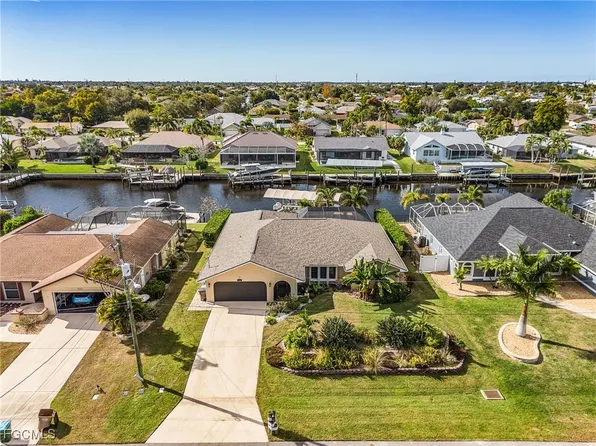
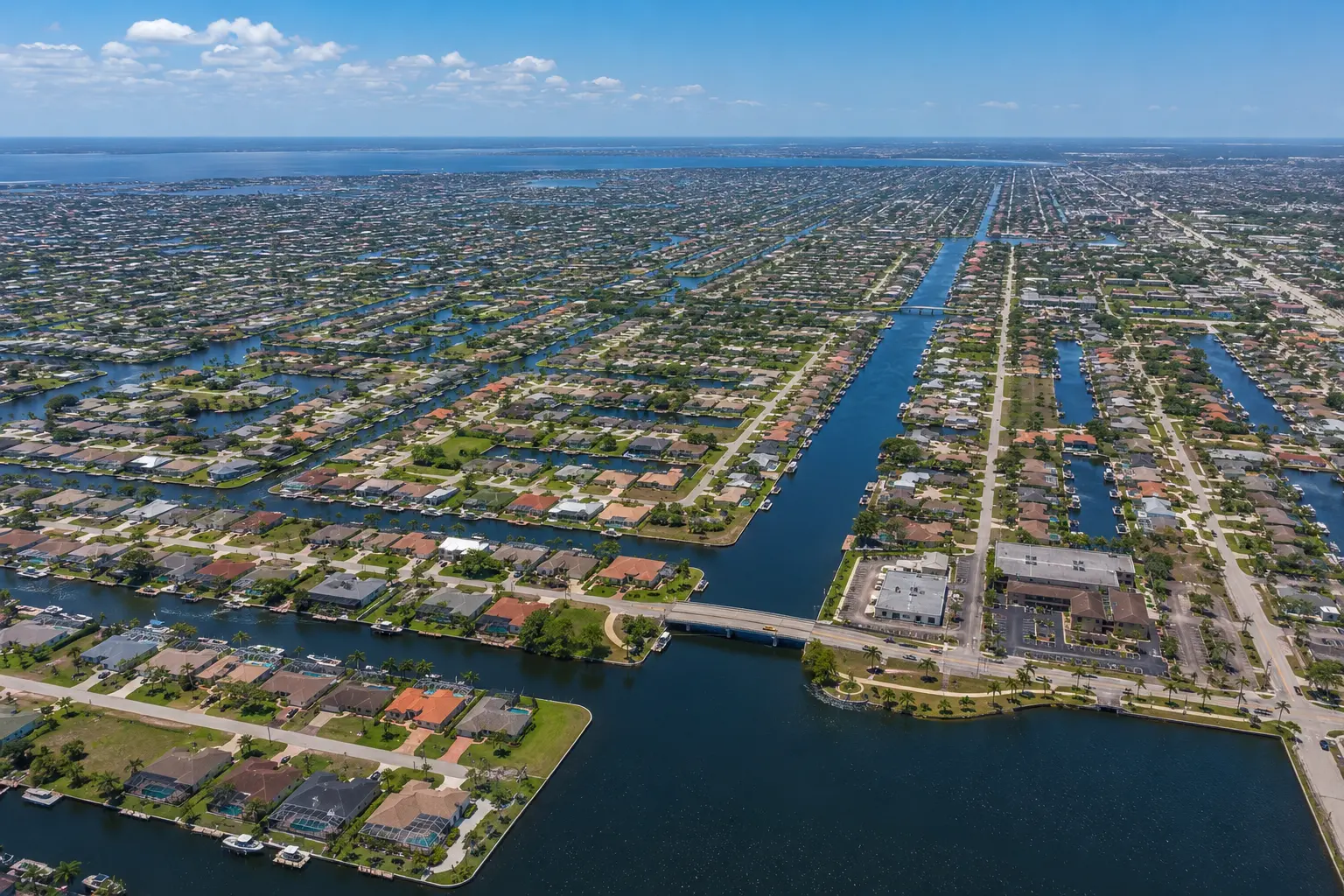
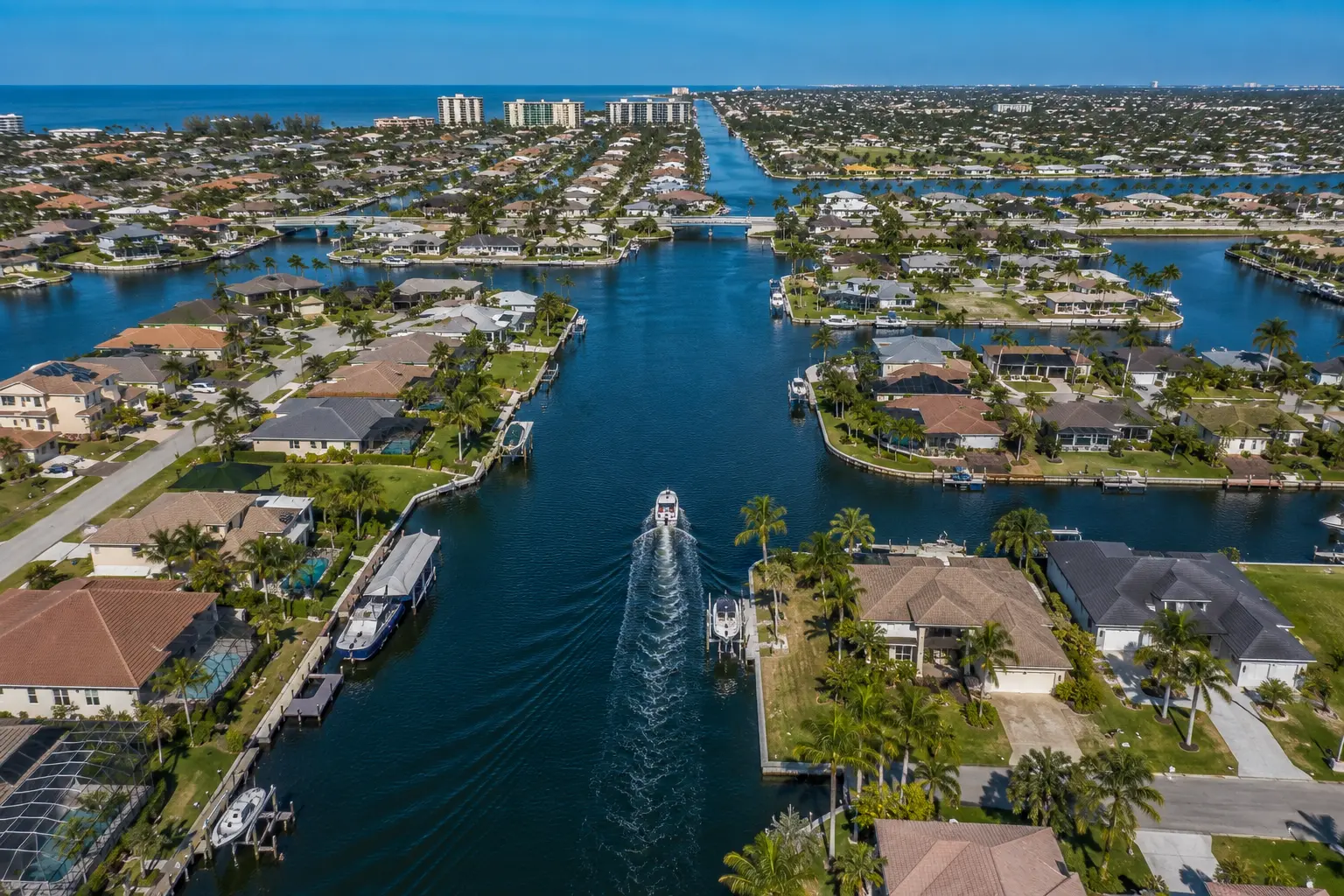
Cape Coral is not a typical Florida real estate market. It is a master-planned waterfront city built around over 400 miles of canals, with distinct geographic sections that directly impact property value, lifestyle, and long-term investment potential. Understanding how the city is laid out is the key to making a smart buying or building decision.
UNDERSTANDING THE QUADRANTS
Cape Coral is divided into four primary quadrants, each with a very different feel, price point, and type of inventory.
SOUTHEAST CAPE (SE CAPE)
The Southeast Cape is the most established part of the city. This is where Cape Coral originally developed, and it still has the most mature landscaping, widest range of waterfront homes, and proximity to dining and nightlife.
Advantages include:
- Direct access to downtown Cape Coral and the entertainment district
- Shorter boat rides to the river and Gulf in many areas
- Higher concentration of sailboat access properties
- More character and variation in home styles
Trade-offs:
- Many homes were built between the 1960s and early 2000s
- Seawalls and docks may require updating
- Lot sizes can be slightly smaller compared to newer areas
SOUTHWEST CAPE (SW CAPE)
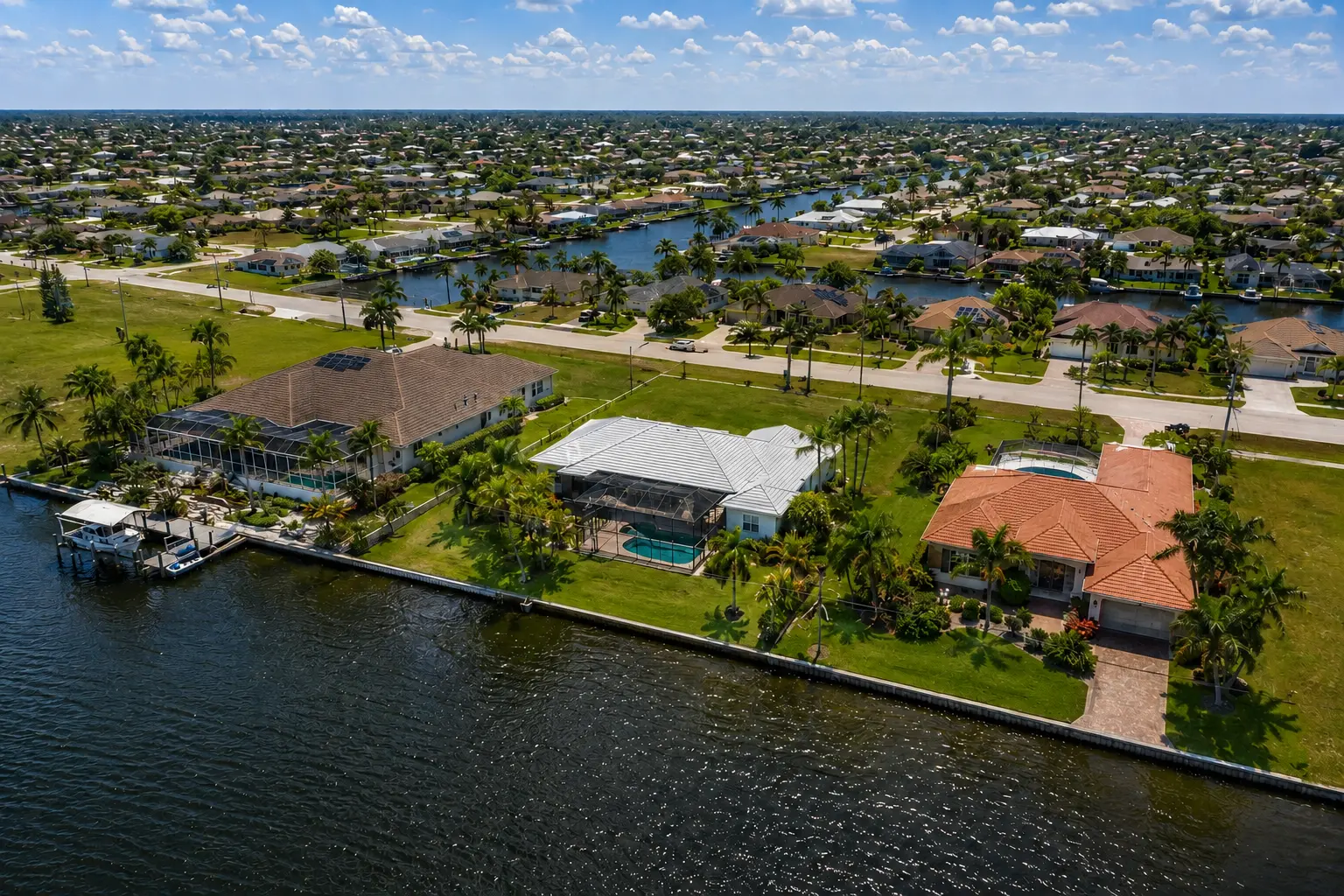
The Southwest Cape has become the most desirable area for newer construction, especially south of Cape Coral Parkway.
Advantages include:
- Newer homes, often built from 2000 to present
- Wide canals and intersecting canal views
- Strong mix of Gulf access properties
- Closer proximity to Tarpon Point Marina and waterfront dining
Trade-offs:
- Higher price points for both land and homes
- Less mature landscaping in newer sections
NORTHWEST CAPE (NW CAPE)
The Northwest Cape represents the future growth of the city. It is less dense, quieter, and offers more space.
Advantages include:
- Large supply of vacant land for building
- Larger lot sizes and wider spacing between homes
- Peaceful, low-traffic environment
- Lower entry price for waterfront property
Trade-offs:
- Longer drive to shopping, dining, and main roads
- Some areas still on well and septic rather than city utilities
- Fewer established boating routes in certain sections
NORTHEAST CAPE (NE CAPE)
The Northeast Cape is primarily residential and more budget-friendly, with a mix of freshwater canals and inland homes.
Advantages include:
- Lower price points overall
- Family-oriented neighborhoods
- Newer homes compared to SE Cape in many areas
- Access to freshwater canals for kayaking and fishing
Trade-offs:
- No Gulf access boating from freshwater canals
- More suburban feel with less waterfront luxury
FRESHWATER VS SALTWATER CANALS
Cape Coral’s canal system is one of the most defining features of the market, but not all waterfront is equal.
Saltwater canals provide access to the Caloosahatchee River and ultimately the Gulf of Mexico. These are the most valuable properties and are ideal for boaters who want open water access. Within saltwater canals, there are two key distinctions:
- Gulf access properties allow boating to the Gulf, but may require passing under bridges or through locks
- Sailboat access properties have no bridges, meaning unrestricted access for larger boats with fixed masts or tall profiles
Freshwater canals do not connect to the Gulf. They are still highly desirable for views, privacy, and recreation, including kayaking, paddleboarding, and fishing. They also tend to be more affordable.
BOATING, DOCKS, AND WATERFRONT INFRASTRUCTURE
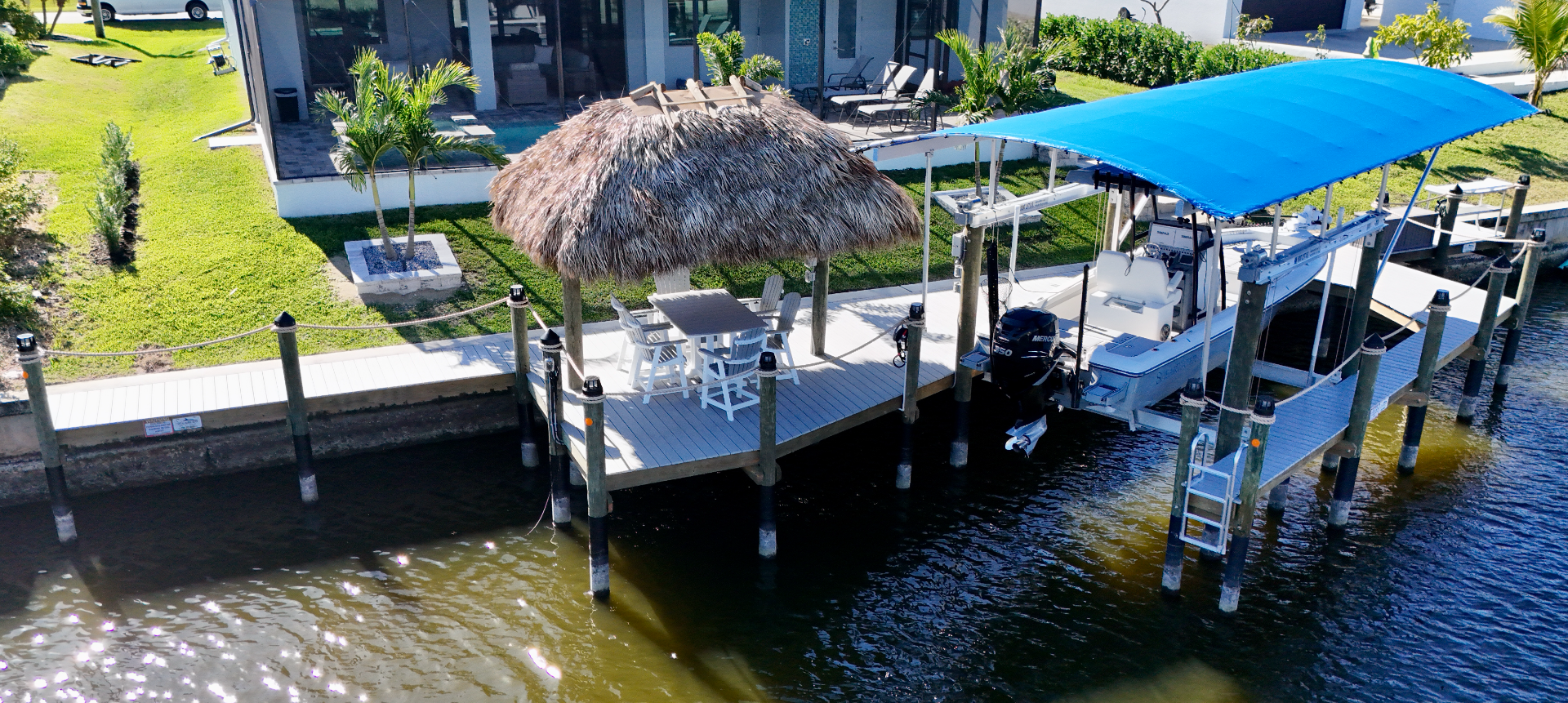
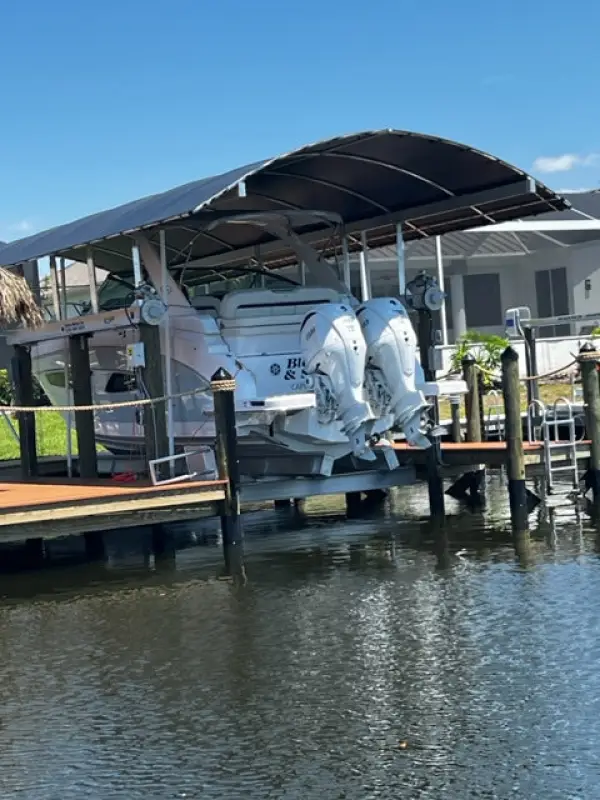
Waterfront homes in Cape Coral are built around boating access, and most properties include or can accommodate key infrastructure.
Seawalls are standard on canal properties and are typically concrete. Many older seawalls were installed decades ago and may need inspection or replacement, while newer construction uses updated materials and tie-back systems.
Boat lifts are extremely common and are often sized based on vessel weight. Covered lifts are popular to protect boats from sun exposure.
Docks vary from simple wooden platforms to fully finished composite docks with water, electric, and fish cleaning stations.
Running water and electric to the dock is a common upgrade, especially for flushing outboard engines after saltwater use.
HOME STYLES AND DESIGN TRENDS
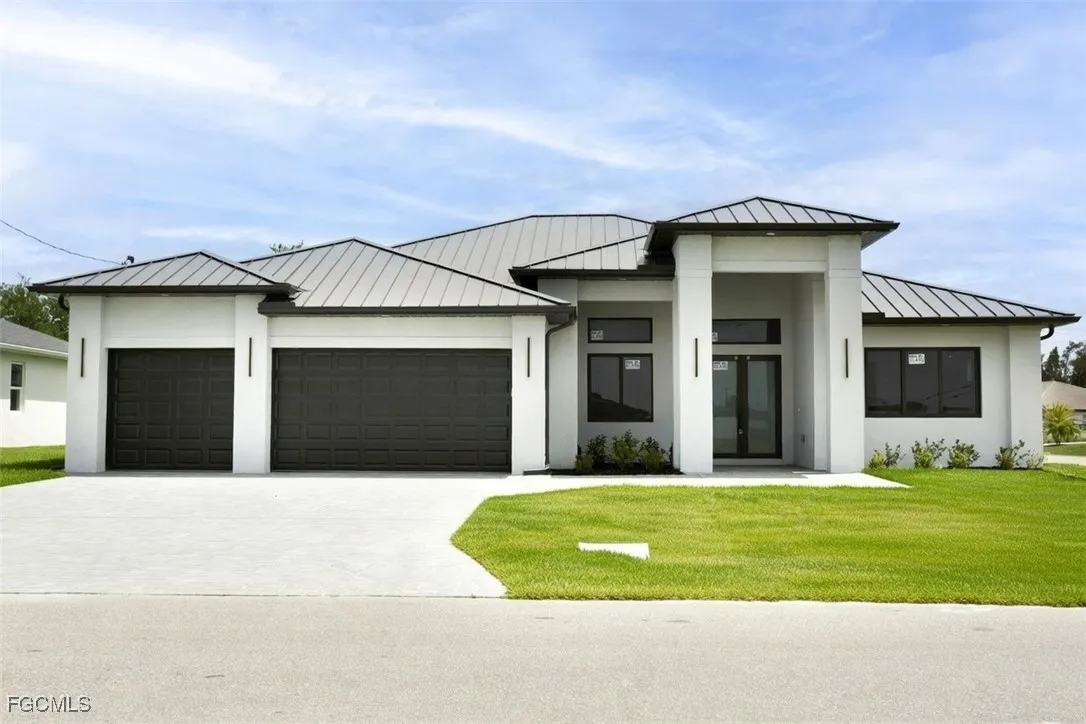
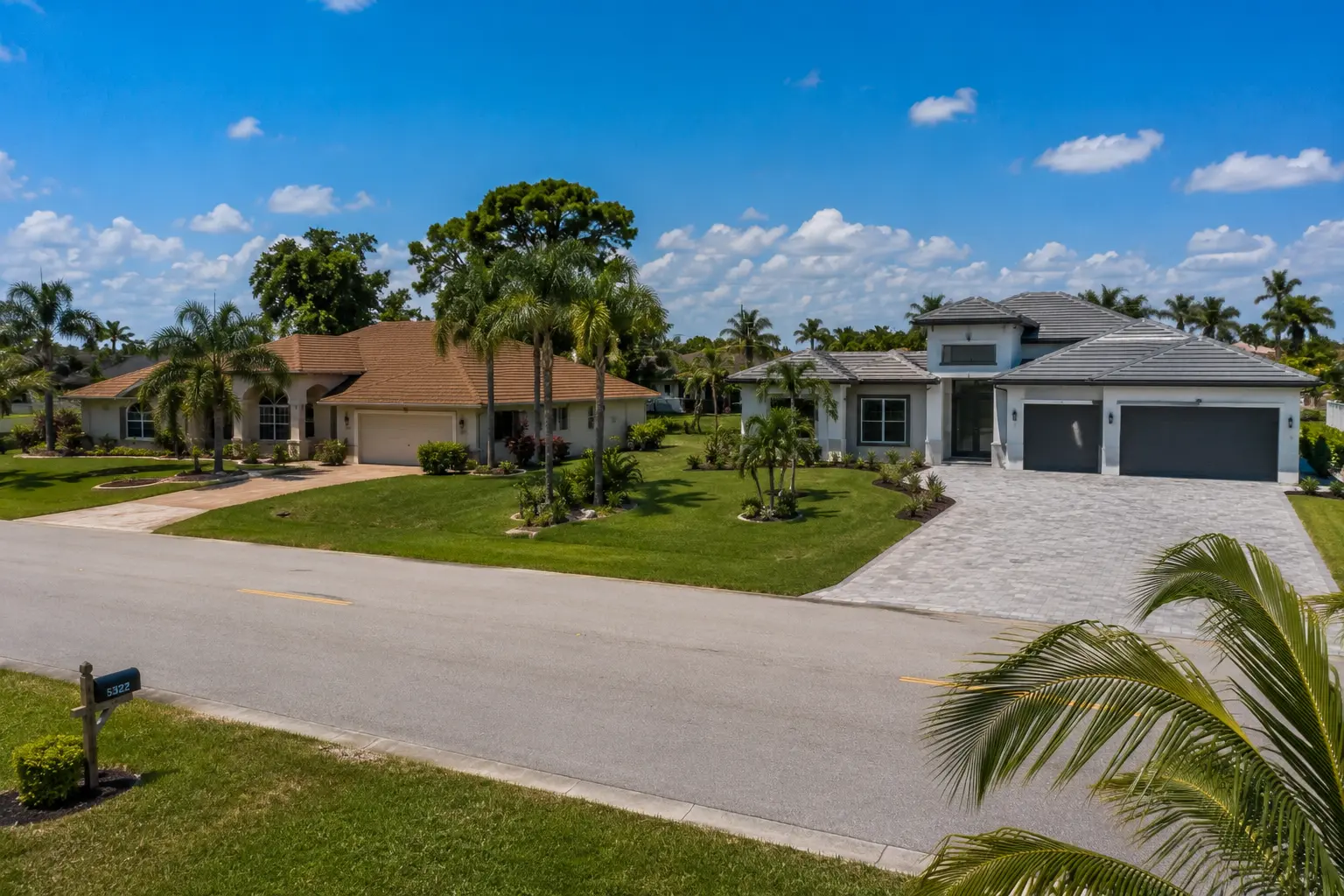
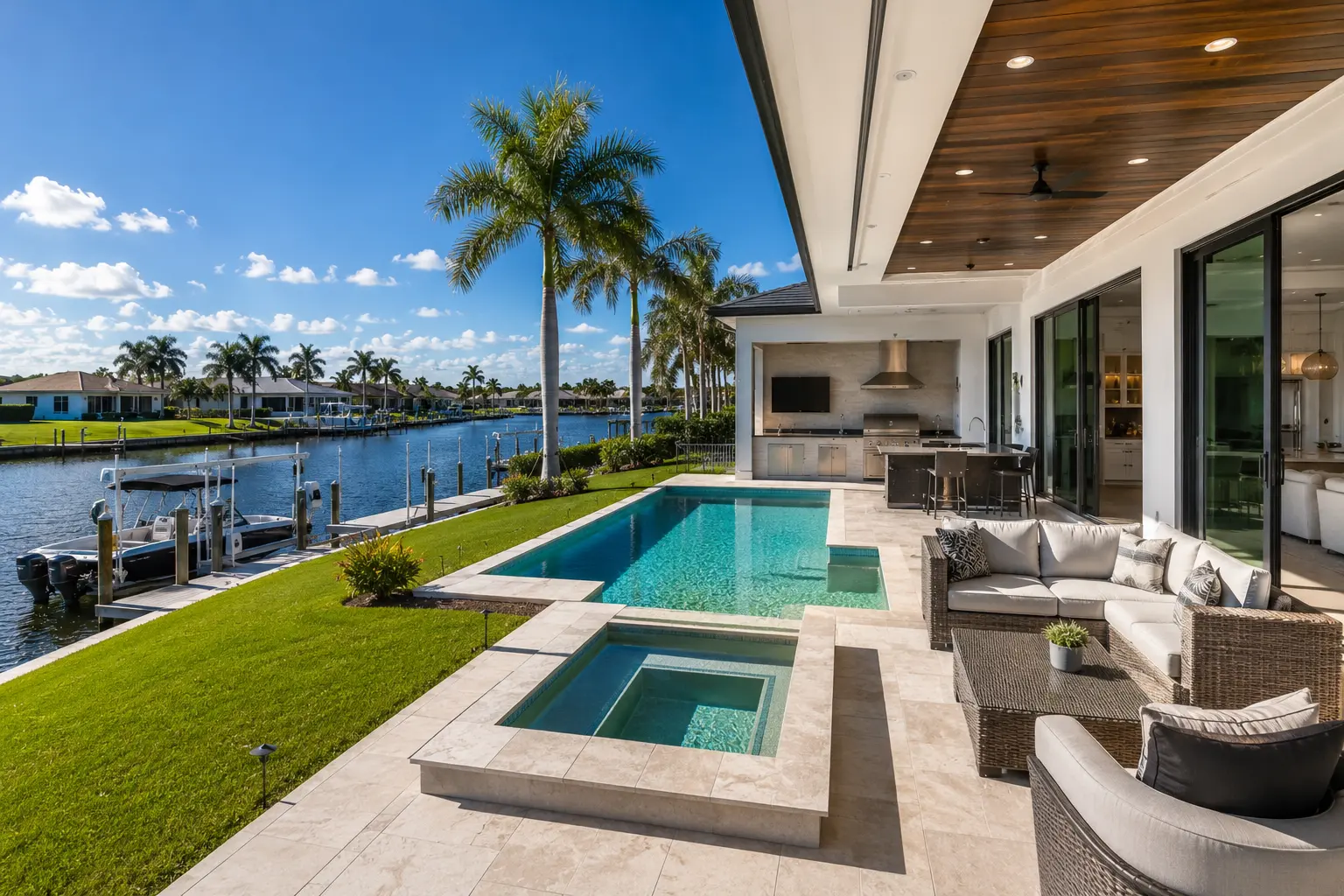
Cape Coral is dominated by single-story ranch-style homes. This is partly due to lifestyle preference and partly due to hurricane and wind considerations.
Ranch-style homes offer:
- Open layouts with high ceilings
- Seamless indoor-outdoor living with large sliding glass doors
- Direct access to lanais, pools, and waterfront views
Two-story homes exist but are less common. They are typically newer builds or custom homes designed to maximize water views from upper levels.
Outdoor living is a major focus. Features often include:
- Screened lanais
- Resort-style pools and spas
- Outdoor kitchens
- Covered seating areas facing the canal
AGE OF HOMES AND CONSTRUCTION QUALITY
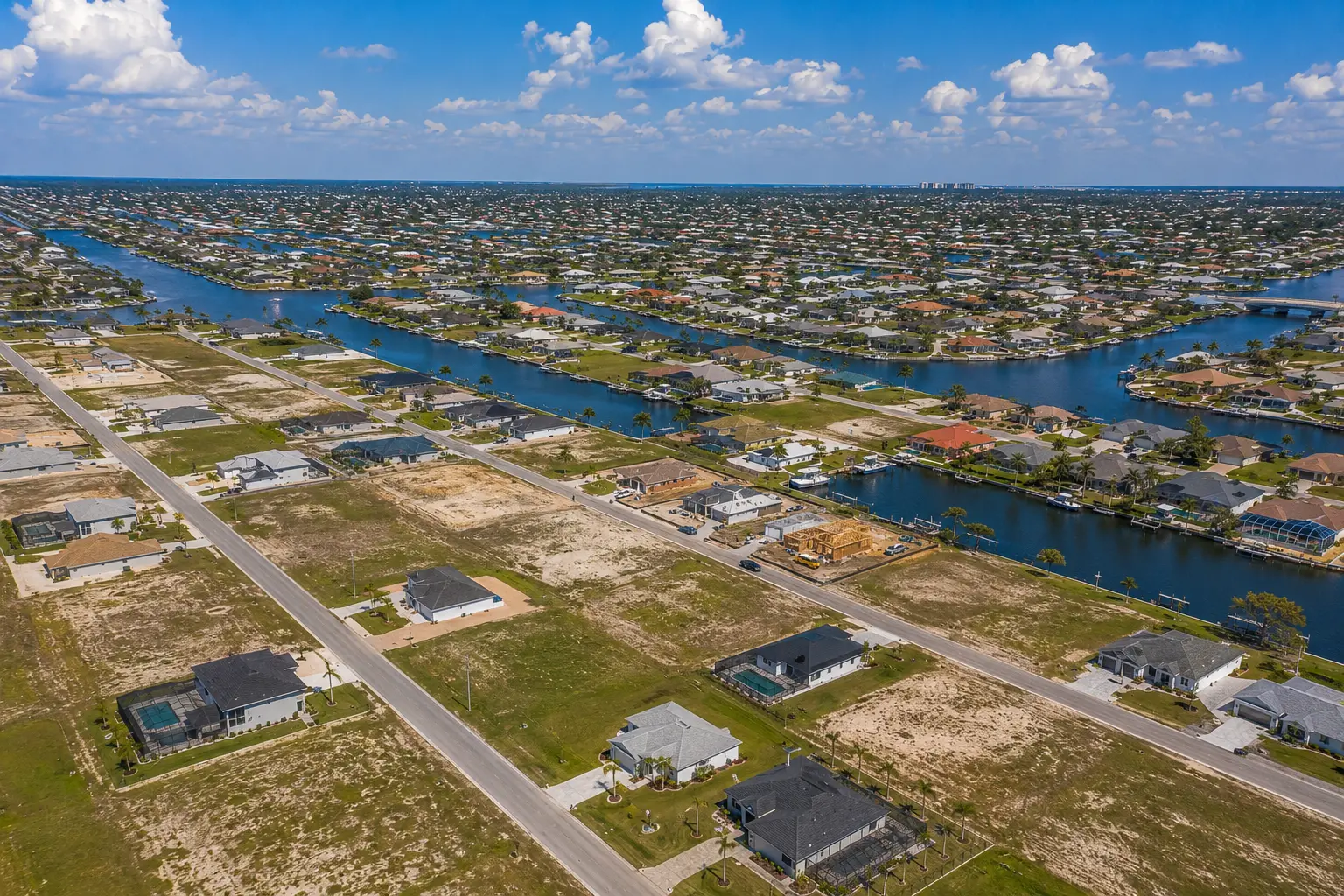
Typical lot sizes in Cape Coral are larger than many other Florida markets.
- Standard lots are approximately 10,000 square feet
- Triple lots and oversized parcels are common, especially in newer areas
- Corner and intersecting canal lots command premium pricing
Home sizes vary widely, but most modern builds fall within:
- 1,800 to 3,500 square feet for standard homes
- 3,500+ square feet for luxury waterfront properties
New construction trends favor:
- 3 to 4 bedrooms
- 2 to 3 car garages
- Open-concept living spaces
- High ceilings, often 10 to 14 feet
LOT SIZES AND HOME SIZES
Cape Coral has a wide range of home ages, which directly impacts maintenance, insurance, and design.
Older homes from the 1960s to 1990s are concentrated in the SE Cape. These may offer better locations but often require updates to roofing, plumbing, electrical systems, and seawalls.
Homes built after 2002 follow stricter hurricane building codes, making them more desirable for insurance and long-term durability.
New construction homes offer the latest in:
- Impact windows and doors
- Energy efficiency
- Modern layouts and finishes
FLORIDA-SPECIFIC FEATURES TO CONSIDER
Cape Coral real estate includes features that are unique to Florida living and especially important for buyers.
- Flood zones can affect insurance requirements and elevation standards
- Hurricane impact windows or shutters are essential for storm protection
- Irrigation systems often use reclaimed water in some areas
- Pool design and enclosure quality significantly impact usability and maintenance
- Roof type and age are critical for insurance eligibility
THE CAPE CORAL LIFESTYLE
Cape Coral is built around water, boating, and outdoor living. This is not just a feature of the market, it defines how people live here.
Residents commonly keep boats in their backyard, use lifts daily, and access the river within minutes from certain locations.
Sunset views over intersecting canals, fishing from your dock, and entertaining on the lanai are part of everyday life.
Compared to many coastal Florida cities, Cape Coral offers:
- More land
- More new construction opportunities
- More control over home design
- Better value per square foot on the water
AFFORDABILITY ON THE WATER COMPARED TO OTHER FLORIDA MARKETS
One of the most compelling reasons buyers choose Cape Coral is simple: it is one of the most affordable ways to own waterfront property in Florida, especially with direct boating access.
In markets like Naples, Fort Lauderdale, and Miami, waterfront homes with private docks often command significantly higher prices, even for smaller properties or older construction.
Cape Coral stands out because:
- You can still purchase buildable waterfront lots at prices that are often impossible to find in other coastal cities
- New construction waterfront homes are widely available, rather than limited to teardown opportunities
- Price per square foot on the water is typically lower than competing markets
- Boat access is available from a large percentage of properties, not just a select few
Another major factor is supply. Cape Coral was designed with canals throughout the city, meaning waterfront inventory is abundant. In contrast, most Florida cities have limited waterfront supply, which drives prices significantly higher.
This creates a unique opportunity: instead of competing for a small number of older waterfront homes, buyers in Cape Coral can choose between existing homes or building new, often at a comparable or better long-term value.
For buyers focused on lifestyle, this means:
- Owning a home with a dock and lift
- Keeping a boat in your backyard
- Having direct or near-direct access to the Gulf
All at a price point that is often substantially lower than other Florida coastal markets.
FINAL PERSPECTIVE
Cape Coral is one of the few places in Florida where buyers can still choose between buying an existing home or building a custom waterfront property with relatively accessible entry points.
The key is understanding how location, canal type, and home age all interact. Once those pieces are clear, it becomes much easier to identify the right property or the right lot to build on.